
Associations must follow the proper HOA ballot counting procedure that state laws and their governing documents set forth. Skipping a step or disregarding the requirements altogether can render the entire process null and void. That said, exact steps can vary depending on the association and the voting method.
What is an HOA Ballot Counting Procedure?
Simply put, the ballot counting procedure is the process that an HOA follows to collect, verify, count, and record votes during an election or membership vote.
This procedure helps ensure that the association only counts valid votes and that the final results are accurate. Typically, the board members are responsible for facilitating this process, but responsibility may also fall on the election committee, an HOA management company, or a third-party inspector.
The steps involved in an HOA ballot counting procedure can vary from one association to another. It ultimately depends on the community’s governing documents, specifically the CC&Rs and bylaws.
Who Should Count HOA Ballots?
In general, ballots are counted by the HOA board, the election committee, an independent inspector, or an HOA management company. Associations must check their governing documents to determine who the responsible party is. Let’s discuss each one below.
HOA Board Members
If state laws and the governing documents permit, board members may count the ballots. This is typically popular among smaller associations that don’t have the manpower or resources to form a separate election committee or hire an independent inspector.
That said, the main concern with this setup is a potential conflict of interest. If incumbent board members are candidates in the election, some may perceive the count as impartial. To avoid this, it is best for board members who are also running for re-election to recuse themselves from the count.
Election Committee
An election committee is a separate group of people working independently of the board. This committee oversees the election. Tasks often include receiving ballots, verifying voter eligibility, counting the votes, and documenting the results.
Establishing a separate election committee can help ensure the HOA ballot-counting process is fair and transparent. It prevents claims of ballot tampering or manipulation. That said, candidates running in the election must not be allowed to join the committee.
Independent Election Inspectors
In some associations, hiring a third-party election inspector is necessary. California, for instance, requires associations to select an independent third party to act as the inspector of elections (Civil Code Section 5110).
This inspector is completely neutral and independent of the association. They must have no affiliation with the board or any of the candidates.
An independent inspector is more common among larger communities or contested elections. This person or people can receive the ballots, keep them secure, verify voter eligibility, oversee the count, and certify the results. They can also answer any questions regarding the HOA ballot counting procedure.
HOA Management Company
An HOA management company can help facilitate the election on the association’s behalf. Depending on the service agreement, this company may distribute ballots, collect votes, verify voter eligibility, assist with the count, and record the results. It can also prepare any necessary election materials and maintain accurate recordkeeping.
That said, the HOA management company must still follow the association’s governing documents. It can’t make and enforce its own voting procedures. Moreover, the company must never act with bias, favoritism, or personal judgment. Neutrality is key.
Who Can Be HOA Ballot Counting Witnesses?
Generally, all members of the association may observe the HOA ballot counting procedure. This includes board members, candidates, and the voters themselves. As for lawyers or legal representatives, state laws and the association’s governing documents determine if they may witness the count.
Of course, witnesses are not participants. They must not interfere with or disrupt the ballot counting process. Anyone who does may be removed from the area by the association. Depending on the rules, the HOA may also levy a fine against that person.
How Does HOA Count Votes?
In general, the HOA ballot counting procedure involves 10 steps: collecting the ballots, securing the ballots, verifying voter eligibility, checking ballot validity, separating and recording invalid ballots, counting the valid ballots, reconciling the vote, handling ties or disputed results, certifying the election results, and announcing the final results.
1. Collect the Ballots
First, the association collects the ballots on or before the submission deadline. Depending on the voting method, this may take the form of in-person ballots, mail-in ballots, proxy forms (if applicable), or electronic ballots.
2. Secure the Ballots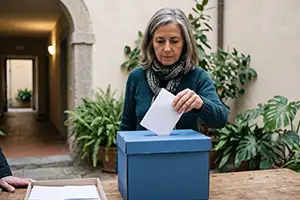
Once collected, the ballots must be properly secured until it’s time to count them. The association must store them in a secure place where only authorized individuals can access them. It is also important to document who received and stored these ballots.
3. Verify Voter Eligibility
Next, the election officials must confirm that each ballot was cast by an eligible voter. This includes cross-referencing membership status, ownership records, and voting rights or interests. Proxies must also be evaluated and documented. This step helps minimize duplicate or invalid ballots.
4. Check Ballot Validity
To meet HOA balloting requirements, the association must confirm the validity of each vote. Ballots must come from an eligible voter. Potential issues that may invalidate a ballot include missing information, selecting too many candidates, voting for an ineligible candidate, altered or duplicate ballots, and late submissions.
5. Separate and Record Invalid Ballots
If the association identifies any questionable ballots, it is important to keep them separate from the rest. An election official can review these ballots to confirm that they are invalid. Make sure not to discard them, as these invalid ballots must be stored and documented as well. Furthermore, the association must record the reasons for rejecting each ballot.
6. Count the Valid Ballots
Next comes the HOA vote counting step. This is fairly straightforward, as votes are tallied for each candidate. If the association allows write-in candidates, the election committee must verify candidates’ qualifications and then count the votes. After the first count, it is best to conduct a second count for accuracy.
7. Reconcile the Vote
The HOA ballot counting procedure doesn’t stop after tallying the votes. It is important to ensure that the number of ballots received matches the number of ballots counted plus any invalid ballots set aside. If there are any discrepancies, the election officials must investigate further. It could be due to missing or duplicate ballots.
8. Handle Ties and Disputed Results
Tie votes or challenged elections can happen. When they do, board members must review state laws and the governing documents for the next steps. Most CC&Rs and bylaws address how to break ties, document challenges and decisions, and consider recount procedures to resolve disputes.
9. Certify the Election Results
From there, the election officials must formally confirm the results. This includes the final vote totals, number of valid ballots, number of rejected ballots, and the candidates elected. Certification typically requires the authorized officials to sign a document or report.
10. Announce the Final Results
Following the HOA ballot tabulation, the association must then communicate the results to all homeowners. This usually takes place at the election meeting. Many associations also announce the results via the community website, newsletter, member portal, or written notice. This way, even those who failed to attend the meeting are informed.
HOA Ballot Counting Procedure Based on Voting Method
Ballot counting may differ depending on the voting method.
- In-Person Paper Ballots. These are easy to count, as each ballot is physically reviewed and manually tallied.
- Mailed Ballots. After receiving a mail-in ballot, the HOA must secure the ballot until the election meeting, where it is counted and tallied manually. Do not open the ballot before the election meeting.
- Electronic Ballots. Most online voting platforms tabulate the votes electronically. Still, the HOA must use a platform that allows for the verification of voter eligibility and prevents duplicate ballots.
- Proxy Votes. This is trickier because it requires confirming that the proxy has been properly completed and remains valid before tallying the vote. Additionally, if the person who gave the proxy decides to vote in person, that vote overrides the proxy.
Of course, regardless of the method, associations must still secure every ballot, verify voter eligibility, review ballots for validity, recount the votes for accuracy, and certify the results.
Doing Things Right
Board members must understand and enforce the HOA’s ballot-counting procedure. Failure to do so can invalidate the whole election, costing the association both time and resources. When in doubt, hiring an HOA management company can prove useful.
Westward360 is a trusted partner for HOAs and condo associations across the United States. For expert association management, contact us today or request a proposal online!