Who Can Run For The Board? Understanding HOA Board Nominations


Every association election begins with an HOA board nomination process. Before owners can cast their votes, the HOA must determine who can run, how candidates are nominated, and what steps the association must follow. Understanding these rules can help the community run a fair and consistent election.
What is an HOA Board Nomination?
An HOA board nomination is when someone puts a homeowner’s name forward as a candidate for election.
Depending on state laws and the association’s governing documents, owners may nominate themselves or another eligible member. Nominations usually take place before the HOA election. Procedures can vary, but most communities require candidates to submit a nomination form and meet eligibility requirements.
Who Can Be on HOA Board?
In general, any member in good standing may run for a position on the board, but qualifications can still vary depending on state laws and the governing documents. For instance, in Florida, Section 720.306 allows any member to serve on the board except delinquent owners.
Common eligibility requirements include:
- Membership. The person must generally be an HOA member, meaning they own a home or unit in the community.
- Good Standing. Some associations require candidates to be current on dues and assessments.
- Age Requirements. Some bylaws require board members to be adults.
- No Disqualifying Conditions. Certain legal circumstances may prevent a person from running, such as being in active litigation with the HOA or having past criminal convictions that would hinder the association from securing fidelity insurance.
How to Nominate HOA Board Members
There are several ways to nominate a candidate, including self-nomination, nomination by another member, nomination through the HOA nomination committee, floor nominations, and write-in nominations. The association’s governing documents determine which methods are permitted.
Let’s discuss each one below.
1. Self-Nomination
This method allows homeowners to nominate themselves for an open board position. Self-nominations work well because interested homeowners can simply throw their hat into the ring without waiting for someone else to submit their name. To self-nominate, the owner may need to complete a particular form.
2. Nomination by Another Member
Homeowners may nominate another eligible member to run for the board. Depending on the rules, the nominee may need to accept the nomination before officially running. It is possible that a nominee may not want to serve on the board and reject the nomination.
Some associations require owners to submit the HOA board candidate nomination in writing. Meanwhile, others allow verbal nominations from the floor.
3. HOA Nomination Committee
Some HOAs appoint a nominating committee. This committee is responsible for identifying and recruiting potential candidates. It’s particularly helpful for communities that struggle to attract volunteers.
Nominations by this committee generally work the same way. They must submit the nomination in writing, usually along with the nominee’s written acceptance. Sometimes, the committee is only given advisory authority, providing the board with a list of qualified candidates.
4. Floor Nominations
Some associations allow owners to nominate candidates from the floor. Floor nominations can take place either at a scheduled meeting before the actual elections or during the election meeting itself. In the latter case, those who have already submitted their ballots may no longer vote for candidates nominated from the floor.
5. HOA Write-in Nomination
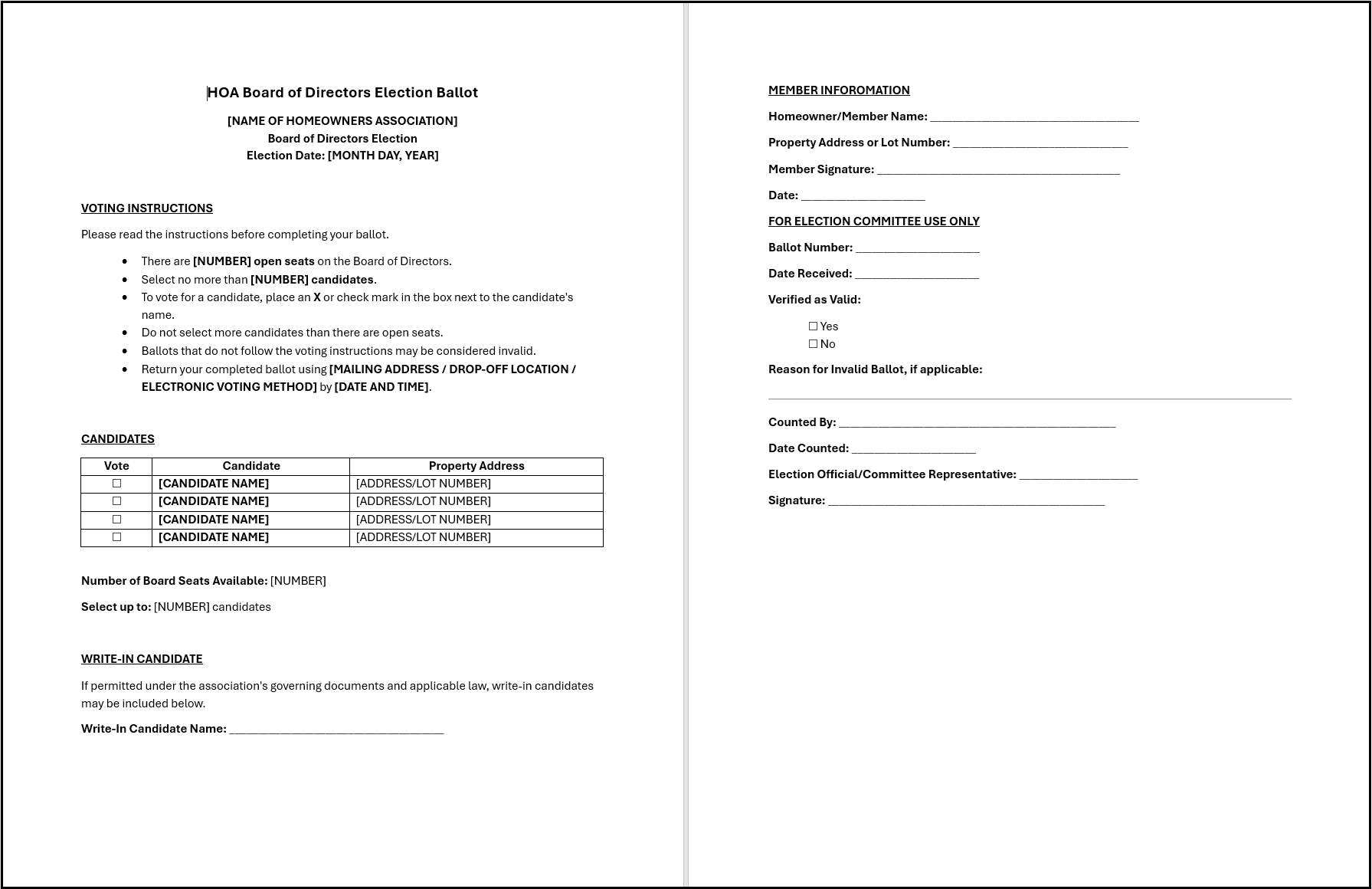
A write-in nomination allows a voter to manually enter the name of an owner who isn’t included in the official list of candidates. If an HOA allows write-in candidates, paper ballots must include a blank line, and electronic ballots must include a text box for voters to enter their choices.
Of course, when counting votes, it is important to verify the write-in candidate’s eligibility. Even if they secure enough votes to win, they can’t be counted if they don’t qualify for the position.
What are the Steps in the HOA Board Nomination Process?
The HOA board nomination process includes the following steps: reviewing the governing documents, announcing the election and opening nominations, collecting candidate nominations, verifying candidate eligibility, and publishing the final candidate list. From there, the election can proceed as normal.
1. Review the Governing Documents
Before opening nominations, the HOA board or election committee must confirm the requirements and procedures set forth in the governing documents. These documents may establish which board seats are up for election, who may qualify as a candidate, and the process and deadline for nominations.
Additionally, the bylaws or election rules typically address the nomination methods that the HOA may use. For example, an HOA may not allow floor nominations if candidates are pre-nominated before the election meeting proper. These documents may also determine if a nominating committee is required.
It is important to establish written nomination rules and procedures that the HOA must follow every year. Changing these rules with each new election can undermine consistency and lead to claims of invalid elections.
2. Announce the Election and Open Nominations
After confirming the rules, the HOA must then officially announce the election and open nominations by sending written notice to homeowners. This notice must also identify the open seats, explain how owners can become candidates, and outline the eligibility requirements. Other than that, the notice must clearly state the nomination deadline and the election date.
3. Collect Candidate Nominations
The next step is to collect candidate nominations. Candidates must submit the required materials before the deadline. Depending on the association, these materials can include a nomination form, a candidate statement, and a completed questionnaire.
If the association has a nominating committee, it may interview candidates or review submitted documents. From there, the committee can finalize the slate of candidates for election. Keep in mind that the exact process can vary depending on the governing documents.
4. Verify Candidate Eligibility
Not all nominees may move on. Associations generally have qualifications that candidates must meet. Before publishing the official candidate list, the HOA must confirm that each nominee is eligible to serve on the board.
Requirements can vary, but they typically include membership status, good standing, minimum residencies, term limits, and other qualifications. After verifying the nominees, the association can prepare the ballots.
5. Publish the Final Candidate List
Associations must make sure that voters are properly informed. Homeowners must get to know the candidates so they can decide whom to support. The final candidate list should include the candidates’ names, biographical information, and candidate statements.
The HOA must publish this list according to its bylaws. Some post it on the community website or distribute it via written notice. Others include it in their newsletters or hold separate campaign meetings for a more personal experience.
Of course, if an association allows floor nominations (during the election meeting) or write-in candidates, owners may vote for someone not in the final candidate list. That said, even floor and write-in candidates must undergo the same verification process when votes are counted.
While self-managed communities can certainly facilitate the nomination process, hiring an HOA management company can ensure fairness and ease.
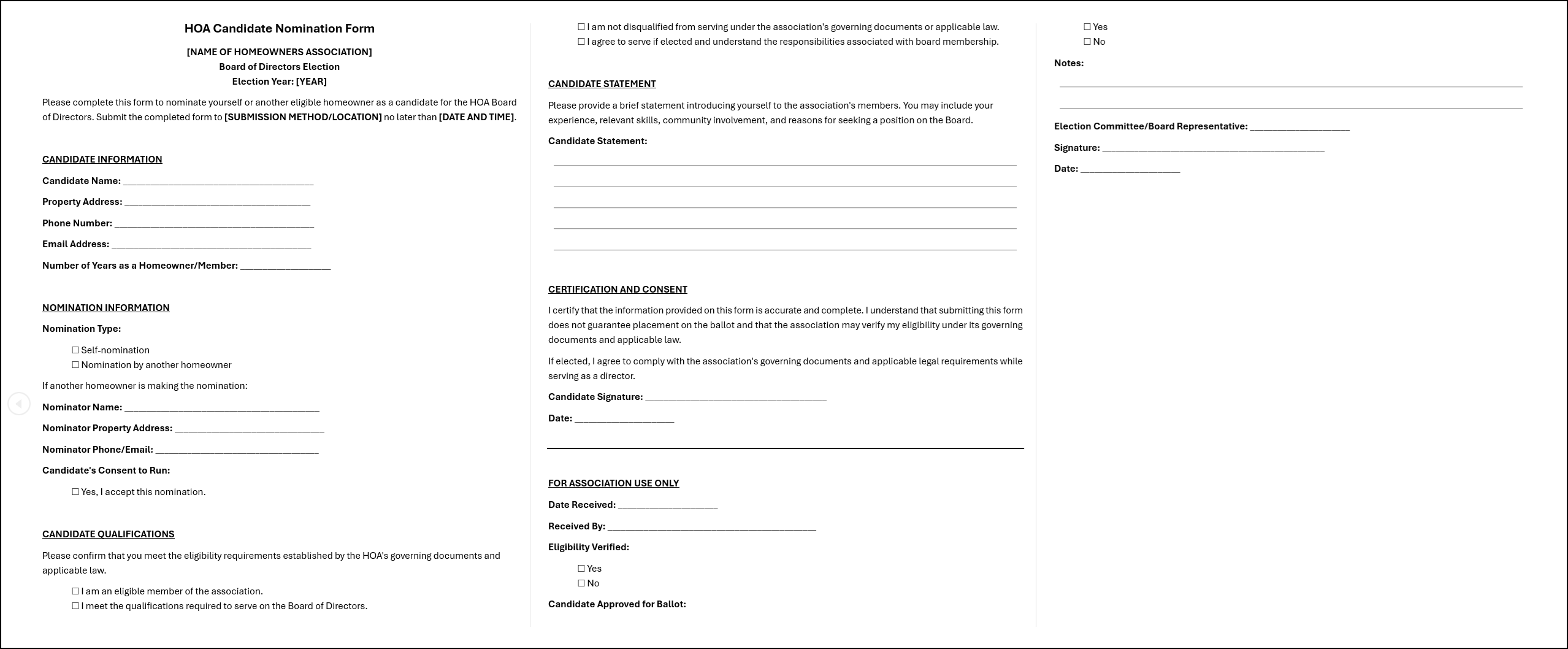
Sample HOA Candidate Nomination Form
Download Your HOA Candidate Nomination Form Here
For Smooth Nominations
The HOA board nomination process helps associations identify eligible candidates before an election. Board members and nominating committees must follow their governing documents and nomination procedures to avoid problems. Each nominee must be carefully verified so that their qualifications aren’t called into question should they win.
Westward360 is a trusted partner for HOAs and condo associations across the United States. For expert association management, contact us today or request a proposal online!