
HOA Maintenance Responsibilities: Who Maintains What?

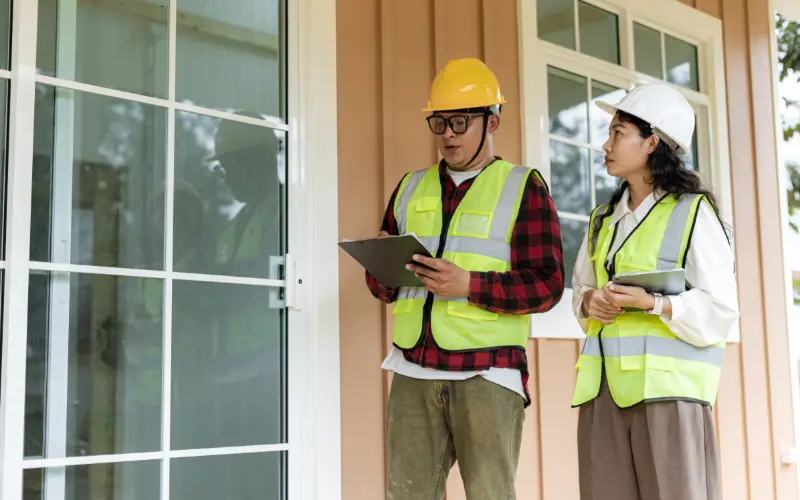
Both homeowners and board members must understand the different HOA maintenance responsibilities. This helps keep the association accountable and ensures proper care of shared elements. At the same time, homeowners can manage and budget for the maintenance of individual properties or units.
What are HOA Maintenance Responsibilities?
HOA maintenance responsibilities are the upkeep, inspection, and repair duties that an association handles. Typically, these tasks are limited to shared properties that the HOA owns or operates.
Maintenance plays an essential role in preserving property values. While exact duties can vary, most associations are responsible for cleaning and maintaining common areas or elements. It is important to check state laws and the governing documents for more guidance.
Is HOA Maintenance Required?
Generally, associations have an obligation to maintain HOA-owned property, including common areas and amenities. Some states even have laws surrounding this.
In Florida, for instance, Section 718.113 places the burden of responsibility for maintaining common elements squarely on the condominium association, subject to the governing documents. Exceptions exist for limited common elements.
What is an HOA Responsible for Maintaining?
HOA responsibility for maintenance typically extends to common areas, amenities and facilities, grounds and landscaping, infrastructure and utilities, and structural and exterior elements. That said, board members and homeowners should still refer to their governing documents for clarity.
1. Common Areas
In general, associations are responsible for the cleaning, upkeep, and repairs of shared spaces. These include elevators, lobbies, and gate entrances.
2. Amenities and Facilities
Access to amenities is one perk of living in an HOA, but these amenities need regular upkeep. Associations are generally responsible for maintaining these amenities, including pools, clubhouses, parks, playgrounds, and fitness centers.
3. Grounds and Landscaping
Associations often handle the upkeep of shared green spaces and grounds. This includes lawn care, mowing, irrigation, and perimeter fences. Of course, this is also more common among single-family HOAs.
4. Infrastructure and Utilities
Associations usually maintain shared infrastructure, such as private roads, parking lots, lighting, sewer systems, electrical, and plumbing. This can also include HOA sidewalk maintenance. That said, board members must know which areas fall under the association’s responsibility and which ones fall under city maintenance.
5. Structural and Exterior Elements
Some communities are responsible for HOA exterior maintenance. This often includes roofs, exterior walls, foundations, and stairwells.
That said, this is more common among condominiums and townhomes, where many elements are shared between two or more units. Moreover, exact responsibilities can vary depending on how the elements are categorized.
What are Homeowners Responsible for Maintaining?
Typically, in an HOA, homeowners are responsible for maintaining individual properties, interiors, exteriors, and limited common elements. That said, the governing documents may say otherwise or have stricter requirements, especially in condominium and townhome communities.
In general, homeowners must maintain their privately owned homes or units. In a single-family HOA, this can include both interior and exterior elements. Examples are appliances, fixtures, plumbing systems, electrical systems, roofs, driveways, exterior paint, and yards.
On the other hand, in condos or townhomes, owners often handle the upkeep of unit interiors, appliances, fixtures, and limited common elements. Limited common elements serve only one or a few units. This can include balconies, windows, doors, and patios.
Homeowners must understand what they are responsible for so that they don’t mistakenly rely on the HOA for maintenance.
How to Know Maintenance Responsibilities in an HOA
To determine which maintenance responsibilities fall under the HOA’s umbrella, check state laws and the association’s governing documents. In particular, members should refer to the CC&Rs, bylaws, and community plat.
The CC&Rs and bylaws define maintenance responsibilities. For example, an association may be in charge of maintaining common elements. This is where the community plat comes in. The plat is essentially a map of the community with labels indicating which components are common elements, limited common elements, and exclusive-use elements.
Given that HOA maintenance responsibilities can differ from one community to another, board members should not generalize. Reviewing the governing documents helps the board clearly itemize what it needs to do and budget accordingly. It also guides the board when educating owners on their individual maintenance responsibilities.
Who Pays for HOA Maintenance?
The association covers the cost of HOA maintenance responsibilities, whereas owners must pay for individual property maintenance.
While the HOA pays for common-area maintenance, homeowners still fund it. The association pays maintenance costs from the operating fund, which is financed through regular dues. The HOA board allocates a portion of the budget to hire vendors for various maintenance tasks.
Long-term capital repairs and replacements are another thing. The HOA also covers these expenses and funds them through reserve contributions from owners.
On the other hand, individual home maintenance isn’t covered by the HOA. These must be paid for by the homeowners themselves.
HOA Preventive Maintenance vs Corrective Maintenance
Preventive maintenance is the practice of scheduling service before components fail, while corrective maintenance is the practice of fixing components after they already break down or malfunction. One focuses on prevention, while the other focuses on repairs.
Both approaches can be beneficial to an association, which is why boards usually adopt a combination. Board members set a clear schedule for cleaning and upkeep, as well as a process for addressing issues after they already happen.
That said, it is a good idea to emphasize preventive maintenance. Preventive maintenance can help save on costly repairs in the long run. It is also more predictable, so the board can schedule downtime during the least busy hours and inform residents ahead of time. Furthermore, preventive care can help equipment last longer.
Supporting Smart Decisions
All in all, the association board has a duty to fulfill HOA maintenance responsibilities. Board members don’t have to perform maintenance tasks themselves, instead relying on vendors. Still, understanding who is responsible for what will help inform the board’s budgeting and vendor management decisions.
Are you looking for a trusted partner in HOA or condo management? Westward360 serves communities across the United States. Start with more effective management by contacting us online or requesting a proposal!
RELATED ARTICLES:
- HOA Winter Preparation: Getting Ready For Super El Nino In Colorado
- Top Tips On Association Insurance Renewal When Rates Are Skyrocketing
- HOA Special Assessment: When Reserves Aren’t Enough