What Georgia’s SB 406 Means for Your Community Association

Starting January 1, 2027, most Georgia community associations must file an additional registration with the Secretary of State every year or lose the ability to fine owners, file liens and foreclose. That is the headline of Senate Bill 406, the Georgia Property Owners’ Bill of Rights Act, which Governor Kemp signed on May 12, 2026.

This is a new filing. It is separate from the annual registration your association already files with the Corporations Division, which only keeps the corporate entity in existence.

The law creates a new Chapter 17A in Title 43 of the Georgia Code. It gives the Secretary of State oversight of associations, sets up a state complaint and hearing process for owners, and changes how associations collect, foreclose and keep records. It affects homeowners’ associations, property owners’ associations and, for registration and payment rules, condominium associations.

Below is what changes, when, and what your board should do before the new year.

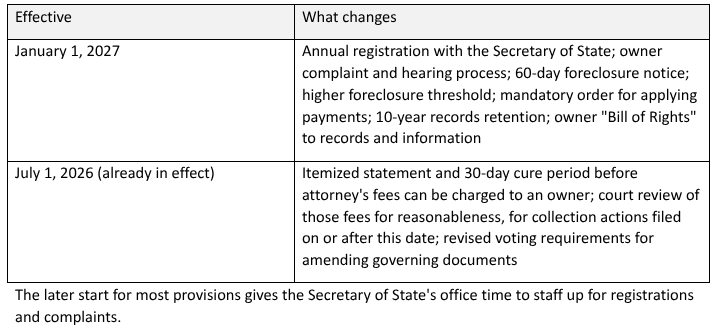
Key dates at a glance

SB 406 phases in over two dates; the January 1, 2027 date carries most of the changes.
Registration with the Secretary of State

From January 1, 2027, an association needs an active state registration to collect fines or fees, file or record liens, or start foreclosure. The registration fee is $100 for the initial filing and $100 for each annual renewal.

As noted above, this is a new filing. It is separate from the annual registration your association already files with the Corporations Division, which only keeps the corporate entity in existence.

Who must register. The Secretary of State reads “owners’ association” broadly: neighborhood HOAs, condominium associations, common interest communities and other groups of property owners governed by covenants or bylaws.

What the filing includes.

  • The association’s name, address and a list of current officers
  • A complete copy of the governing documents
  • A financial statement dated within the past 12 months

Keeping it current. An amended registration is due within 30 days of any change in name, address or officers, or any other change that materially affects the association’s business or control.

If you don’t register. An unregistered association keeps operating, but it cannot fine owners, record liens or foreclose. The Secretary of State can also deny, suspend or revoke a registration, limit fines and fees, or bar an individual from serving on the board for willful violations, misstatements in filings, unpaid fees, or ignoring a state order or subpoena.

How to file. Registration will run through an online portal. The Secretary of State says details will come closer to January 1, 2027.

Owner complaints and state hearings

Owners gain a state-run alternative to court: they can challenge an association’s action, or failure to act, before a Secretary of State hearing officer. The state is already accepting complaints but will not act on them until January 1, 2027.

How an owner complaint moves:

  1. Complaint. An owner files within 180 days of the association action or inaction that harmed them.
  2. Automatic stay. Collection of any disputed fines or fees pauses until the hearing officer decides.
  3. Hearing and decision. A hearing officer reviews whether the association acted within its covenants and governing documents.
  4. Compliance. Parties have 15 days to carry out the hearing officer’s decision.
  5. Appeal. Either side can seek court review within 20 days: magistrate court for claims under $15,000, superior court above that.

Associations get their own hearing rights when the Secretary of State acts against them. A hearing must be requested within 10 days of the state’s notice and is held 5 to 30 days after the request. An association that loses an owner-complaint hearing pays an extra $100 administrative fee to the state.

Collections, liens and foreclosure

Foreclosure gets harder and payment handling becomes standardized. The foreclosure changes below apply to associations under the Georgia Property Owners’ Association Act; the payment-order rule also reaches condominiums.
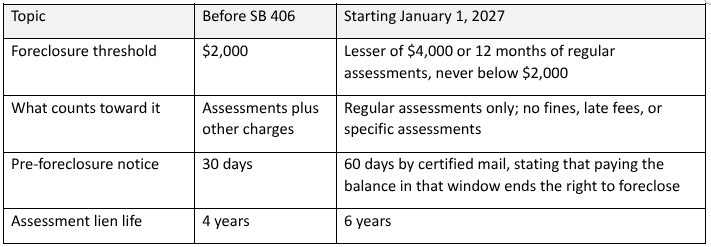
Order of applying payments. Owner payments must go, in order, to: (1) regular assessments, (2) special assessments, (3) specific assessments, then (4) fees and fines. This overrides any different order in your governing documents.

Other collection limits. Associations may not refuse an owner’s payment of assessments, and may not charge or collect accelerated assessments.

Already in effect since July 1, 2026. To pass attorney’s fees on to an owner, the association must first send an itemized statement and allow 30 days to cure. A court must find the fees reasonable before awarding them.

Owner rights, records and meetings

SB 406 writes an owner “Bill of Rights” into state law (O.C.G.A. § 43-17A-7). Owners have the right to:

  • Inspect and copy association records, including accounting and banking records, on written request, in line with state law and the governing documents
  • Receive the association’s certificate of insurance for coverage that may apply to them
  • Get notice of member meetings and attend them; the board must hold a members’ meeting at least once a year
  • Receive the statutory notices and process before any foreclosure on their property

Records retention. Registered associations must keep records of assessments, fines, fees, liens and foreclosures for at least 10 years, at an office in Georgia or their principal office.

Expect more records requests. How far the new inspection right overrides limits in existing bylaws is still unsettled, and the Secretary of State’s draft rules on records, meetings and board good faith were the subject of public hearings on November 4–5, 2026.

What your board should do before January 1

  • ☐ Budget the $100 registration fee and name who will file once the online portal opens
  • ☐ Gather a current officer list, a full set of governing documents and a financial statement dated within the last 12 months
  • ☐ Set a process to file amended registrations within 30 days of officer or address changes
  • ☐ Update collection letters and ledgers for the payment-order rule, the 60-day foreclosure notice and the new threshold
  • ☐ Confirm attorney’s-fee demands include an itemized statement and 30-day cure period
  • ☐ Set up 10-year retention for assessment, fine, fee, lien and foreclosure records
  • ☐ Prepare a written procedure for owner records requests and insurance-certificate requests
  • ☐ Confirm your annual members’ meeting is scheduled and properly noticed
  • ☐ Review pending fines and disputes, since owner complaints can pause collection
  • ☐ Ask your association attorney to review governing documents against the new law and the final state rules

A note on this summary

This article is general information, not legal advice. The Secretary of State is still finalizing implementing rules, so details may change before January 1, 2027. Please consult your association’s attorney about how SB 406 applies to your community.

Nov 12, 2026 · by Scott Sells, Regional Director, and Eric Staszczak, Executive Vice President

Sources

Cooperator Expo Recap: Community Management Insights & Tips for Board Members

The 2026 Cooperator Expo brought together community association board members, homeowners, property management professionals, and industry vendors for valuable conversations and educational opportunities.

In this video, Westward360’s Eric Staszak, Executive Vice President, and Mike Daly, Director of Business Development, reflect on this year’s event and share insights from their conversations with board members and industry professionals.

Key topics discussed include:

  • Common concerns among community association board members, including responsiveness and vendor relationships
  • The growing need for education and guidance as association responsibilities become more complex
  • Challenges facing self-managed communities and the value of management support
  • Tips for making the most of industry expos, building vendor relationships, and evaluating management options

Whether your association is self-managed or professionally managed, staying informed and connected can help your board make more confident decisions.

Watch the full discussion below.

Fall Maintenance for Chicago Rental Properties: How to Prepare for Winter

Fall in Chicago is more than a change in weather. For rental property owners, it is an important opportunity to prepare buildings for the colder months ahead.

A strong fall preventative maintenance plan can help identify smaller issues before freezing temperatures, snow, and increased demand on building systems turn them into larger problems. While unexpected repairs will always be part of owning rental property, preparing ahead of time can help reduce disruptions, control costs, and keep properties operating smoothly throughout the winter.

Whether you own a single rental property or a larger multifamily portfolio, here are five areas worth considering as part of your fall property maintenance plan.

1. Make Sure Heating Systems Are Ready for Colder Weather

Heating systems are one of the most important places to start when preparing a Chicago rental property for winter.

Rather than waiting for the first stretch of freezing temperatures to discover an issue, fall provides an opportunity to inspect and service furnaces, boilers, thermostats, filters, and other heating components before they are operating at full capacity.

Depending on the property and type of system, fall HVAC preventative maintenance may include replacing filters, checking thermostats, inspecting equipment, firing up boilers, and addressing known issues from the previous heating season.

For multifamily property owners in particular, getting ahead of heating issues can help reduce the likelihood of multiple service requests arriving at the same time when temperatures first drop.

The goal is simple: make sure the property’s heating systems are ready before they are truly needed.

2. Inspect the Exterior and Building Envelope

Chicago winters can expose weaknesses in a building that may have gone unnoticed during warmer months. Fall is a good time to inspect the exterior of a rental property and identify areas that could become vulnerable to cold temperatures, snow, ice, or moisture.

Areas worth reviewing include:

  • Roofs and visible roof components

  • Gutters and downspouts

  • Windows and exterior doors

  • Caulking and weather seals

  • Exterior masonry or siding

  • Drainage and areas where water may collect near the building

  • General landscaping and exterior cleanup

Something as simple as a clogged gutter, damaged seal, or drainage issue can become more difficult to address once temperatures fall.

Fall cleanup also provides an opportunity to clear leaves and debris, address landscaping needs, and make sure gutters and drainage systems are ready for changing weather.

For Chicago property owners, preventative maintenance is often less about finding one major problem and more about identifying smaller items before winter makes them harder to address.

3. Reduce Plumbing and Freeze Risks

Plumbing should also be part of any fall maintenance and winterization plan for a Chicago rental property.

Exterior water sources should be winterized where appropriate, while exposed plumbing, poorly insulated areas, basements, vacant units, and other portions of the property that may not receive consistent heat deserve additional attention.

Vacant rental units can be particularly important to monitor during colder months. Even without residents present, maintaining appropriate temperatures and regularly checking the property can help identify potential problems before they escalate.

Taking preventative steps before freezing temperatures arrive can help reduce the risk of discovering a plumbing issue only after damage has occurred.

4. Walk Common Areas and Exterior Grounds

Fall is also a good opportunity to walk the property from a resident’s perspective.

Exterior lighting, stairs, railings, walkways, entryways, and other common areas should be reviewed before snow and ice make everyday access more difficult.

This is also the time to start thinking ahead about snow and ice removal. Property owners should understand who will be responsible, what areas of the property need to be serviced, and how that work will be coordinated when winter weather arrives.

For multifamily rental properties, these common areas are used every day by residents, vendors, maintenance teams, and visitors. A relatively simple property walk can often identify maintenance items worth addressing before conditions become more challenging.

5. Build a Preventative Maintenance Process, Not Just a Checklist

Individual maintenance tasks are important, but having a repeatable process for completing them can be just as valuable, particularly when managing multiple rental properties.

At Westward360, our property management teams follow a three-phase recurring maintenance process across our portfolio. The schedule helps our teams proactively address seasonal and recurring property needs rather than waiting for an issue to occur.

Phase 1: Fall Preparation

The first phase focuses on preparing major building systems and exterior areas for colder weather. This includes firing up and flushing boilers, completing HVAC preventative maintenance, cleaning gutters, and coordinating general exterior and landscaping cleanup.

Phase 2: Winterization and Snow Preparation

As winter approaches, the focus shifts toward winterizing properties and preparing for snow and ice. This includes addressing seasonal winterization needs and making sure snow removal plans and responsibilities are established before winter weather arrives.

Phase 3: Ongoing Safety and Recurring Maintenance

The third phase addresses additional recurring property needs, including fire extinguisher inspection and maintenance, as part of a broader preventative maintenance calendar.

Not every rental property needs the exact same maintenance schedule. Building age, systems, size, layout, and other property-specific factors can all affect what should be prioritized.

The broader takeaway is the importance of having a defined process. Preventative maintenance becomes much easier to manage when owners know what needs to be completed, when it should happen, and who is responsible for coordinating the work.

Preparing Your Chicago Rental Property for Winter

No preventative maintenance plan can eliminate every unexpected repair. Rental properties are operating assets, and maintenance issues are inevitably going to happen.

The goal is to reduce avoidable surprises.

For Chicago rental property owners, fall provides a natural window to inspect major building systems, address smaller maintenance items, prepare for snow and freezing temperatures, and make sure there is a plan in place before winter arrives.

At Westward360, seasonal and preventative maintenance is part of our broader approach to property management. By proactively coordinating maintenance, vendors, resident needs, and recurring property responsibilities, our teams help owners stay ahead of their properties throughout the year.


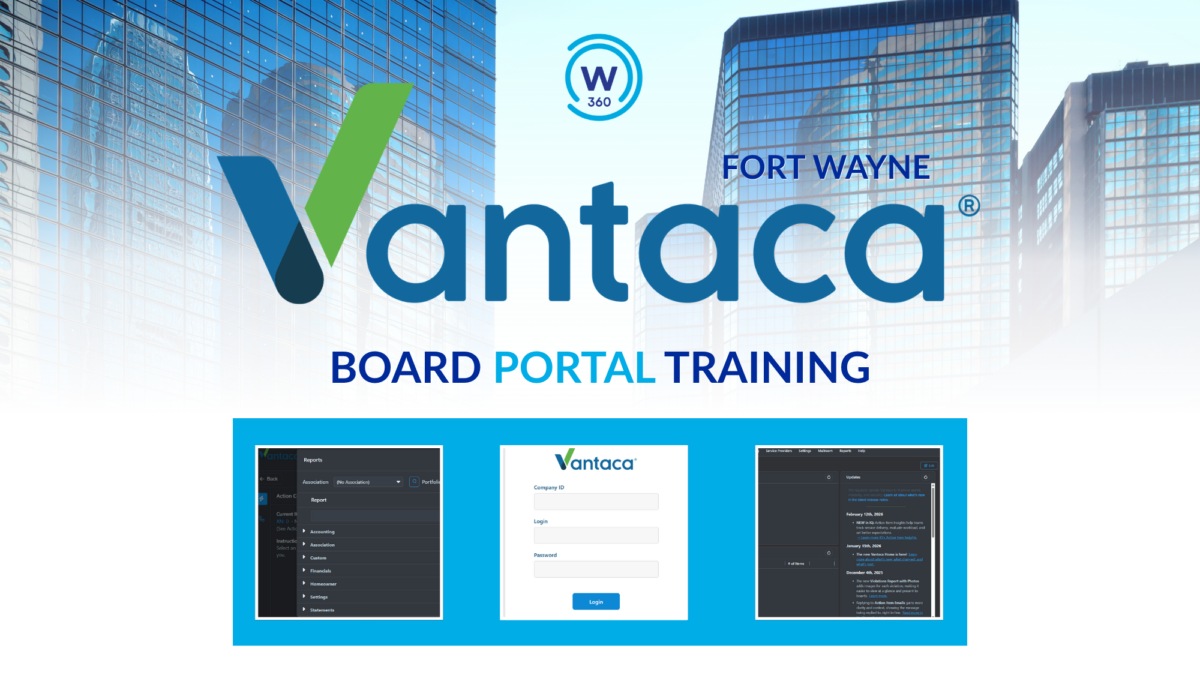
Vantaca Board Portal Training

Watch the recording of Westward360’s Vantaca Board Portal Training webinar, covering key features and tools available to community association board members. The session provides an overview of navigating the Board Portal, reviewing action items, accessing financial and collections information, monitoring violations, managing architectural requests and approvals, and using document storage and calendar functions.

This recording is a helpful resource for HOA and condominium board members looking to better understand and utilize the Vantaca Board Portal.

Watch Full Webinar Here:


Illinois 2027 Legal Updates: What Community Associations Need to Know

Illinois community associations are facing several important legal and regulatory changes heading into 2027. In this educational webinar, Westward360 is joined by attorneys Ryan Shpritz and David Savitt of Kovitz Shifrin Nesbit (KSN) to discuss key updates affecting condominium and community associations.

The session covers the new requirement for associations to adopt a written collection policy by January 1, 2027, including important considerations for delinquency, late fees, payment plans, legal referrals, and collection procedures. The presenters also discuss reserve funding expectations from Fannie Mae and Freddie Mac, including the 15% reserve contribution baseline being incorporated into upcoming budgets.

Additional topics include new rental fee disclosure requirements, changes regarding emergency vehicle parking, updates to discriminatory restrictive covenants, and requirements surrounding dues allocation and owner approval.

Whether you are a board member, community association leader, or property management professional, this webinar provides practical insight into the upcoming changes and steps associations should take to prepare.

Watch the full webinar to better understand these updates and how they may impact your association.

This webinar is for educational purposes only and does not constitute legal advice.


Reserve Studies And Changes To Reserve Fund Lending Guidelines

Reserve studies are essential for helping community associations plan for future capital expenses, meet evolving industry requirements, and support long-term financial stability. In this webinar, Westward360 and Reserve Advisors discuss why reserve studies matter, how they’re developed, and how boards can use them to make informed budgeting decisions and fulfill their fiduciary responsibilities.

This session is ideal for HOA and condominium board members, community managers, and anyone looking to better understand effective reserve planning.

ARC Remodel Request and Approval Process

This educational webinar provides an overview of the Architectural Review Committee (ARC) remodel request and approval process using the Association Portal. Board members will learn how homeowners submit architectural requests, how to review project details and supporting documents, cast approval or denial votes, document conditional approvals, and access historical ARC records. The session also covers management support, recordkeeping, and available resources to help associations create a more efficient and organized architectural review process.

Denver Board Financial Literacy

Board Financial Literacy is designed to help community association board members better understand the financial reports and responsibilities that support effective governance. This webinar covers the purpose of financial statements, balance sheets, income statements, reserve funds, budgeting, audits, and fiduciary duties. Whether you’re a new board member or have years of experience, you’ll gain practical insights to help you make informed financial decisions and confidently oversee your association’s financial health.


WWT Favicon

Use the search bar below to help locate what you are looking for on our site.